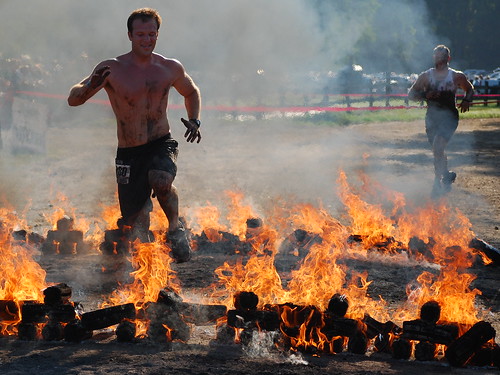
Exercise and osteoarthritis, two recent reports have been published with apparently conflicting conclusions:The medically orientated Nature Reviews in Rheumatology suggests there is (as I suggested in the previous blog optimal joint usage for healthy cartilage), and a sports medicine journal article from Dr Williams suggests that long distance running decreases risk of osteoarthritis.
Naturally, from the Twittersphere, those people who love running feel their pursuit has been justified. those people who commercial promote exercise will use it as propaganda. I find it sad that on this issue, just like so many, people pick the evidence that suits their believes rather than balancing evidence.
Now lets start with a reminder. Osteoarthritis is a condition of painful joints, which involves the whole joint, but one of its hall marks is the loss of cartilage. Cartilage lines the hip and knee joints. The cells that make it (chondrocytes) actually sit within the the cartilage of the joint. They respond to the loads placed upon the joint by producing cartilage... within reason. If you don't use a knee and hip joint at all, you would expect the muscles to waste away, the bones to become thin and brittle, and the cartilage become thin also. I think we can probably all agree on this. However, cartilage is a living tissue. It is not shoe leather. Part of the confusion is caused because cartilage has no blood vessels so it does not bleed, and it has no nerve fibers running out of it so you don't feel pain from the cartilage itself. But it still needs to be loved! We know for absolute certainty that excessive weight (high BMI) promotes you getting osteoarthritis, even the Dr William's paper shows this.
There is clearly debate as to how much usage is ideal. The sporty paper could be used to support the argument that "it's the more the merrier", but there are huge confounding variables. The author did what he could, but it is difficult!!! The analysis was not able to exclude two possibilities (1) That slimmer people (with lower BMI) may run more and (2) That people could start to run less when they get painful joints. If you believe that either (1) or (2) could be true they presumably you will come to the conclusion that this new paper does not really answer the key question of how much usage is ideal.
So the other paper, the Nature review? Well it is just a few line summary of a very thorough paper in the "Osteoarthritis and Cartilage" journal. But This is what is reported. The LEAST active elderly people loose cartilage, but so do the MOST active!!! Activity is assessed with a PASE survey, and yes age and BMI is taken into account. Also, the study tracks people and so ceasing activity due to joint pain is less of a factor. Now bare in mind this is activity assessed by PASE not running marathons! PASE asks a number of activity questions, see Table 1. They then considered the top 15% and bottom 15% activity rates and compared against the middling people.
...BUT and here is the elephant in the room. The health crises we have at the moment is due to obesity and lack of exercise of people, not over exercise, so whilst I would suggest that the jury is out on how much exercise is good for your joints.... for the rest of you LOTS of exercise is clearly a great thing. ...and for me too, but I am lazy :-/
So the conclusion: Everything in moderation?
Table 1: PASE Activities, Performances and Weight Scores
PASE stands for: Physical Activity Scale for the Elderly
| Activity | Answer | points |
|---|
| Walking and bicycling | Hour/day | 20 |
| Light SRA | Hour/day | 21 |
| Moderate SRA | Hour/day | 23 |
| Heavy SRA | Hour/day | 23 |
| Muscle strength/endurance | Hour/day | 30 |
| Paid/unpaid work | Yes/no | 21 |
| Light housework | Yes/no | 25 |
| Heavy housework | Yes/no | 25 |
| Home repairs | Yes/no | 30 |
| Lawn work | Yes/no | 36 |
| Gardening | Yes/no | 20 |
| Caring for others | Yes/no | 35 |


 Posted with Blogsy