Twitter

Instagram View Richard Barrett-Jolley's profile on LinkedIn
Showing posts with label BBC science. Show all posts

Thursday, 20 February 2014

Placebo; something about nothing!

I am sorry to dissent from the general chorus of both lay and scientific praise for the Horizon placebo program (Medicine's of the Mind "Power of the Placebo"). Many people seem to have found it fascinating, I'm not one of them. I thought it was all nonsense (if you are quick you can still watch it here)!
One of the disappointing things science can do is take a really simple phenomenon and make it more complex. Science should attempt to do the opposite.  So to clarify; most lay people have never (IMHO) had a problem understanding any of the following cliches:
  • If something excites you (not like THAT) your heart to beats faster.
  • You get a performance boost from confidence and/or positive mental attitude.
  • Under-performance can result from under confidence.
  • Fear can turn your stomach.
  • Fear can make you go weak at the knees.
  • In a fight situation, humans and other animals can suppress pain and don't really hurt until they are out of the danger zone....
There are so many of these its crazy. Placebo is just another one of these; if you truly believe you will feel better, you will feel at least a little better.
In teaching its a critical factor.  Telling students they will all do well WILL improve their performance.  And if you are my students worry not, it's no trick, I don't mind if you read this because I am absolutely sure you WILL do well.  There is nothing like confidence for optimum performance.  I have seen students in the past so nervous they couldn't even write their own name on the front of the papers.  Guess what?  They do terribly in the rest of the exam too.  Listen to my voice my students:  you WILL do well, really you will!
Now the program went to great lengths to show that there were real chemical changes in the body whilst this was happening (after people took placebo). But HELLO!! we are little more than a collection of chemicals. Everything you sense, think or do involves changes of chemicals. If you see something, glutamate is released in the eye and various neurotransmitters are released throughout the brain. If you think or imagine something, chemical changes take place in the brain. If you believe you will feel better, of course chemicals will change. If you lift your own leg... chemical changes take place in the process.
A couple of specific points about the program; the cyclists performing better and/or feeling they performed better?  Well people are absolutely hopeless at assessing their own feelings to start with (as I discussed here), and any good coach would know a bit of appropriate inspiration at the right moment will improve performance.  Why do people break so many world records at the Olympics?  This is exactly the same as the benefit of a so called "pep talk".  The the "mystery" of the placebo was further illustrated with a patient who's symptoms improved even though she was told she was going to get placebo.  All that matters is whether you feel you will feel better.  ...and typically of course the disease they chose was IBS "irritable bowl syndrome".  This is notorious for being a "there's nothing wrong with you get out of my surgery" type of disease.  Frequently people can be really ill with it too of course, and disturbingly, my guess would be that people "diagnosed" with IBS are frequently suffering from undiagnosed Crohn's or coeliac disease. Nonetheless, in many cases it the GPs way of saying, "I don't deny there is something wrong with you, but I can find anything to account for the symptoms you are reporting".  Bottom line (pun intended).. its not a great vehicle for demonstrating the magic of placebos.  
So giving people placebo, results in them thinking differently to non-placebo people and this change in thinking results in change of chemicals. To me, it is no big deal.
So why am I so evidently wound up by this? For two reasons.
(1) The idea that we are anything other than a collection of swirling chemicals and electricity is patent nonsense.  I feel there is no place for such arcane pre-science gobbledygook.  If you are surprised that chemicals change in the body when people "think positive" where have you been!? ...and if you thought that and you are even a biological scientist... Wow.
(2) Throwing your hands up in the air with amazement when someone shows that thinking changes chemicals in the brain is opening the door for woo. Why do I say that? ...because the next thing will be TV showing how people feel better after taking homeopathic remedies (aka water) and correlating this to chemical changes in the brain. Look they will say, homeopathy changes chemicals in the brain... So it was true all along. Well no it wasn't. Homeopathy is nonsense and just try and remember chemicals are constantly changing within the body. And will do so until well after we all die.
And on that cheerie note, I think I shall go and buy a high fat pizza and bring my own demise a little closer!!

Friday, 30 August 2013

Magical Sunburn Medicines courtesy of TRPV4

28th August 2013
There was a lot of recent coverage of a paper claiming that a particular protein called "TRPV4" causes the pain of sunburn. It has been floated that this could allow us to magic up some really great sunburn relief creams and hugely increasing Q.O.L ... Quality Of Life!!
What I was hoping to do in the blog is discuss (1) why this is not such a good thing! .... (2) why I say they "claim" rather than "show", (3) what the TRPV4 protein is, and finally da da da da daaaaaaa (4) Exerimental treatments.
Why is this new discovery a bad thing?
OK chronic pain... I.e., pain which goes on for weeks, months and years is a terrible thing, and we think of this as a disease in itself. Acute pain is rather different; in some cases it is awful, but frequently it is a really effective warning that something is awry and needs to be sorted. People who lack pain sensing ability have a dreadful time, they injure themselves left right and centre and just don't know until serious harm has been done. There are animals which lack pain sensing for particular types of pain when it suits their lifestyles, but for the rest of us it's a protective mechanism to stop us injuring ourselves. So in this case, not only does the sun age your skin, but it really does, unambiguously give you cancer. The more you can tolerate being burnt, presumably the more you will allow yourself to be burnt and the more likely you are to get cancer.
DOCTOR DOCTOR, I KEEP TRYING TO GIVE MYSELF SKIN CANCER, BUT SUNBURN KEEPS DRIVING ME IN DOORS... WHAT CAN I DO ABOUT IT?
As for pain relief; in theory morphine like drugs and local anaesthetics would already stop the pain if that was all you wished to do. Morphine is considered too dangerous, and local anaesthetics, basically inappropriate. Obviously you should speak to your pharmacist of GP about treatment, but generally they'll say moisturising creams will feel nice and some ibuprofen-like drugs or paracetamol (acetaminophen) may help... a bit.

Why did I say "claim", rather than "show"?
I really hate "scientists have shown" on the news. What they should say is Dr Fred blogs and colleagues have shown... Or possibly "a new research a paper shows". Frequently, these days the truth would be "a University Public Relations press release says"..... Anyway in this case it was a research paper that the information was published. The Journal is called the Proceedings if the National Academy of Sciences (PNAS).
Well it is no suprise that TRPV4 would be involved, it is found all over the body and important for all sorts of things, but there is always scope for skepticism with this type of report. It was published in the journal PNAS, which has an excellent reputation although it has an unusual procedure for selection and review of scientific papers. Some people have raised objections to this. Secondly, there is a tendency for people to always find the particular protein they work on to be the lynchpin of whatever system they happen to work on ;-)
In fact my own colleagues and I were looking at a different protein that seemed important. They don't have to be mutually exlusive though. There are probably many proteins which are involved in sunburn pain.
TRPV4 is likely to be involved however, because it is a protein which is important to sensing much of the normal mechanical (touch) stimulation of the skin. In sunburn we have an oversensitivity to touch, therefore, it stands to reason that if you loose the ability to sense touch, you will also loose the sunburn induced oversensitivity!
What is the TRPV4 protein?
This is top dead centre my area of research. I'd like to step back and remind people that we are, as animals, mostly chemicals and electricity. Now I am sure many people know this, but if you don't its going to sound like sci-fi, but it really is known quite well. All nerves that either transmit senses like touch, pain or pleasure are effectively electric wires. Electric current flows through them like wires running between a switch and a light. The voltage is about a thousandth that of a domestic light, or a hundredth of a modern torch. TRPV4 is a type of protein called an "ion channel" which acts to generate this voltage... An ion channel has two parts conceptually, a battery and a switch. In th case of TRPV4, the sunburn throws the switch thus stimulating the nerve cells which conduct the pain to the brain. In fact this "ion channel" can be activated by all sorts of other things too... Including pressure and some drugs/chemicals. The problem with it, a drug target though, is it really is found so widely throughout the body... Side effects could be a real problem.

Some experimente to see if its true?
I think not! There are a number of chemicals known which inhibit the action of TPRV4 already. Therefore they should prevent the pain of sunburn. It would be irresponsible of me to list them here, but they are no doubt, findable with some Googling. Presumably they would reduce the pain of sunburn. Most of these compounds are expensive and pretty deadly. TRPV4 is found all over the body, so you'd not just loose the sunburn, your kidney would not work properly, your joints would be affected, you'd feel numbness and loose control of your blood pressure. So direct application to the skin? Unfortunately, they tend either to not penetrate the skin, or they do absorb nicely, but they give you cancer :-(
Personally, waiting it out or using paracetamol seems a better idea to me.


Tuesday, 20 August 2013

Exercise and Obesity

Now this one is more me!
Now I have to say I think the BBC "People men made us thin" series has been great, and in many ways music to my ears.  
The dogma are:
(1) Eating too much makes you fat.
(2) Exercise makes you thin.
(3) Genes

Do diets make you thin?
(1) They have gone some way to debunk this in the program.  Of course they have taken an extreme attitude.  If you don't eat, you will loose weight, but the psychology of dieting is more complex.  The study designs are difficult too.  So they studies showing diets don't work will usually say "here's a dieter 2 years later and they have put on 10lbs/5Kg, but here is a non-dieter and this person put on zero weight: ergo, dieting doesn't work".
There is a fundamental flaw in this argument though.  The people who diet typically have weight control issues and were always going to put on more weight than people who have never had a problem and never diet!!
So my bottom line would be that dieting is in no way all that it is cracked up to be, but if you are over-weight it is better to try and reduce your calorie intake than to just give up!!

(2) Does exercise make you thin

Again the program takes an extremist view of this issue.  I it is true that exercise is a really slow and relatively ineffective way of loosing weight  ...but it depends on the exercise, and whether it was the only lifestyle change you made.  Really this is a life-style thing.  To simply drive to the gym 3 times a week and burn off a few hundred calories is not going to make a significant contribution to a serious weight problem.  Those few hundred calories could easily be swallowed up just by one post exercise trip to Starbucks.  If you control calories and do more exercise, the exercise will prolong your life and keep you healthier, but really its the calorie-control bit that will knock off the pounds. Turn down that free chocolate bar at the checkout and you have just saved the equivalent of about a two mile run!  

(3) Genes
Your genes profoundly affect your weight.  This is mostly by changing the appetite control systems in your body.  Potentially there are many drugs which could change this, but it's not a great idea just yet, because these drugs tend to do too much other stuff.  ..i.e., "side effects".

All this lot is just the same for your pets too.  It's really important to give a dog a great walk or two every day... but weighing their dinners are the secret of weight control!!


Thursday, 27 June 2013

The Taste of Cheese: ... visual illusions, acupuncture and medical research!!?

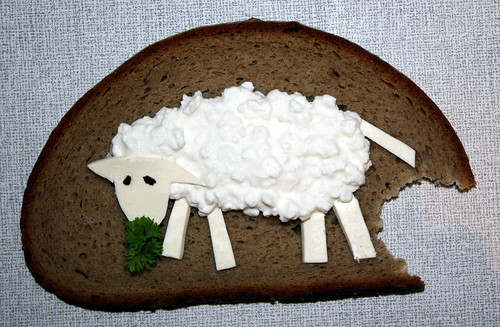
Have a snack! - Was für ein Käse! :-))))))))))

The BBC were running a story all yesterday about how cheese and yoghurt taste different when eaten in different ways, like from a metal versus plastic spoon?  Did you hear it?  http://bit.ly/CheeseSense Their science editors made a mistake, because they thought it was a science is silly story.  That's is pretty much mostly what the BBC science editors like.
So why is it not silly?  Because it is a simple example of a phenomenon so hugely important that it hampers diagnoses, makes creation of new medicines difficult and fuels "woo" science and medicine.  People believe they can trust their own senses, but they simply cannot.
So lets have a visual example; this page shows a number of small videos where it is very difficult to spot obvious differences between the two images: http://bit.ly/VisualIllusions.
So as our resident experimental psychologists and neuroscientists will tell you: "you cannot trust your eyes".  
Does this relate to cheese taste?  YES.  You can't trust your eyes, and you can't trust your tongue either. The cheese obviously tastes the same (in that it is chemically identical), but you think it tastes different because of the context.  We humans are easily confused.  An aside: I guess this proves the Cher song "it's in his kiss" to be totally wrong.
Yuk, may be I shouldn't have gone there.
OK now medicine, "woo medicine" in particular.  Pain is just the same.  The owner of any particular pain is really bad at knowing the intensity of their own pain.  It is a fundamental problem.  Now there are several things going on here:
(1) It is difficult to describe or quantify pain.  Scoring, as you do to your clinician on their 1-10 scale is difficult.  We all know this, but it is different to the topic of this blog.
(2) There are definite built in body processes which dampen down pain in the same way as strong pain killers such as morphine.  These tend to be based around chemicals called "endorphins".  ...they can be activated, by stress and all sorts of things that are not fully understood.  Furthermore, the awful truth about "chronic pain" (sometimes people have long term pain without clear physical cause) is that there seem to be "un-endorphin" mechanisms we know little about (we are tying believe me!!).  This is still different though.
(3) Even excluding (1) and (2) we can't judge our own pain!  so have you had an aspirin for  headache and someone ask you if it's better? you reply something stupid like "I think so"?  Well I do!!!  ...but is not just me.  I was in great pain myself once and given morphine on a drip.  I remember saying to my nurse... "I think that seems to be working".  Obviously  3o mins later it was blindingly obvious the pain was relieved, but EXACTLY when it went off was always a bit vague to me.  So here we now have the nub of the problem... if you give someone a painkiller that is mildly effective it is very difficult for people to really know whether it has "worked" or not.  Put pressure on them, by clearly investing a lot of time and effort in trying to help them and they will say "yes its a little better" even if they really don't know.  Its human nature.  So there are ways we get around this.  We use placebos.  Just give them nothing disguised as something and see if they can tell the difference?  Frequently people "say" they feel better after they actually had nothing.  This is sometimes called the "placebo" effect and it is a scientificy way to say they said they thought they were better, but they were mistaken. It's a sensory illusion! People including scientists and clinicians frequently try to investigate a so called placebo effect, but this is nonsense.  The phenomenon is simply that there is a tendency for people to believe a pain has improved when really it hasn't. Now this is the same as the cheese*!! 
 You simply cannot trust your own senses.  So if you have a new pill you wish to test, you compare it to a placebo. If it doesn't beat the placebo you through it away. "Simples!"
...but how can you set up a placebo for acupuncture?  or gels you smear on your need to help osteoarthritis  ....or faith healers etc?  You just can't.  ...and therefore if you are trying to look for smallish improvements in peoples health and sense of well-being there is no point asking the person concerned.  Just like the cheese and the visual illusions, people are too easily confused by the context.
You cannot trust your own senses (or anyone else's).

*There is also the "pressure" aspect, ever asked directions and someone replies in a funny accent?... you will ask them to repeat it once, maybe twice, but embarrassment would prevent you from asking for 100 repeats even if you still didn't get it.  Students do it all the time.  Their mouths say "yes I understand" their eyes say "I have no idea what you are talking about".  The difference here is obviously people know they don't know, but are embarrassed to say...

Saturday, 23 February 2013

Mosquitoes, DEET and Evolution

There have been loads of references recently to the recent mosquito DEET story. Mosquitoes adapt to DEET rapidly and cease to be repelled by it. It has very wrongly been described as "evolution". It has nothing to do with evolution.... it is simple biochemistry/pharmacology.

Background

OK, DEET is a really effective mosquito repellent I first heard of it travelling to Florida. Some people seem to be inherently more pre-disposed to being bitten by mosquitoes than others... I am one of those people that seem to be extremely tasty! I guess it's because I smell nice? Anyway the Park Rangers showed me how to cover-up from the insects and slap on insect repellent This was remarkably effective. Having come from the UK, our products at the time (1970s) were woeful... but this American DEET containing product was really great. Don't confuse it with DDT which is a powerful insecticide... that builds up in insect eating animals etc. etc.

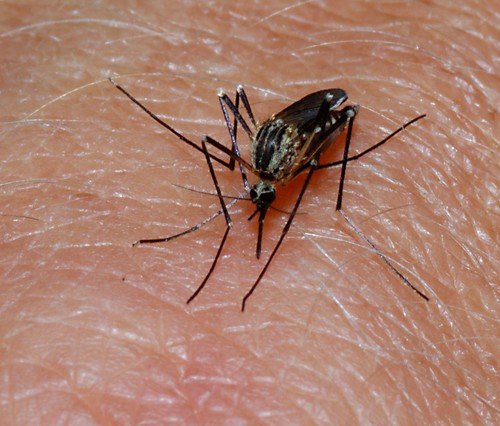
Mosquito bite


The Phenomenon

DEET is smelly. Insects don't like the smell. A phenomenon with smells is that you rapidly get used to them and cease to detect them. Take body odour (BO). The magic of BO is that you cannot smell it, and everyone else can? Noticed? It is because you have gotten used to the smell and can no longer detect it. Noticed someone walk in the room and say it smells like burning? The only way to check is to leave the room walk about and then walk back in and see if you can NOW smell it?
This is the phenomenon is known as desensitisation. Or technically "receptor desensitisation". It is also at the heart of many medical conditions in particular, physical drug addiction (psychological dependence is a bit different). So am I saying the DEET mosquito phenomenon is related to drug addiction? I certainly am. The science is the same.

The Science Bit

Here goes, hold on to your hats. Most drugs work by combining with a type of protein in the body called a receptor. Each drug has its own receptor. "Drug" in this context is a substance which causes a biological effect... it does not equate to "illegal substance" or "narcotic" or anything. Opium is a drug, but so is Sudafed (pseudoephedrine). Once the receptor protein has combined with the drug, it causes an effect or a "response". The response depends on the type of drug and receptor we are talking about. Some, like opium combining with opium receptors reduce pain and cause euphoria. Others cause blood vessels constrict or dilate... or make you sleep! Smells work in exactly the same way as drugs. (So do tastes.) They are chemical gases or vapours which dissolve in the snot of your nose and then combine with a protein receptor and cause a response. The response in this case though is simply to alert the brain to the fact that this particular smell is present.

So smells are just like drugs?
Well no, smells aren't like drugs, but the point is the the biological mechanisms by which they work are the same as the way drugs work!
With most drugs, there is a mechanism of receptor desensitisation where the same dose of drug causes progressively small effects each time you use it. The exact mechanism by which this happens is not entirely understood, but its investigated a lot of course!
So repeated exposure to a drug or a smell leads to that substance being detected less and less. With opium, to get the same kick... you have to take more and more. With smells this explains why you can't smell your own perfume (all day) or why you can rarely detect your own body odour!!! Mmm yum! What happens long term?
Well if you stop taking the drug, or you stop being smelly... you start to return to normal and become sensitive to the substance again! How long does it take? Depends on the substance. Can be minutes, can be days or weeks. For a human smell, its probably minutes. For it to, in ANY way, be like evolution it would have to pass on to the next generation!! The BBC should not just quote any unguarded comment that we scientists make, they should check it makes sense first.


The bottom line

So this seems to be all that is happening with DEET. The receptors desensitise. The "adaptation
" of mosquitoes to DEET is an interesting discovery, but not surprising in the light of our understanding of how smells work..... probably temporary and NOTHING to do with evolution!!!


Some translations:
opium is really a combination of natural opioids; mainly morphine.
The technical word for the process of smelling is "olfaction", the substance you smell is called an olfactant and the receptor it binds to is called olfactory receptor.


Tuesday, 19 February 2013

The Importance of Being Boring

Hmmm, I've just hit a problem with my grand entry into the blogosphere...   What I am hoping to do is bring some deeper explanation to some of the various science stories which hit the media (i.e., those I know something about!), and frequently to debunk the silly stories that emerge from a rather scientifically illiterate media.
...the problem: Well of course the media see there job as to make everything interesting!  No bad thing, except that accuracy is frequently abandoned and balance is not even on the radar!  So beware the science news source which has to sell its stories!  To be honest, scientists often have to exaggerate and skip facts to be understood... but the idea of this would be to retain the real essence of the story.  The media really just don’t care. Interesting/wacky/fun is the most important thing.  Nothing else really matters.  The Mail and the Express seem to be the worst, from reading the headlines on newspaper racks.  They seem to have a cure for osteoarthritis every month for example.  Has anyone ever thought... “how come they keep publishing stories about new cures, but I have it/ or my mum has it and there doesn’t seem to be a cure!?”.
Well on that particular one: there is no cure. Sorry.  May be one day, but it will come in so slowly (years of trials first) that it will probably bypass the newspapers all together.

So... If I set about taking interesting media science stories and debunking them, this is going to be an awfully tedious blog!!!

Tuesday, 15 January 2013

BBC's Fairness in Chimpanzees story. Why it's flawed.

This morning, the BBC was airing a story about chimpanzees having a sense of fairness.  I am not surprised, I would have guessed that, although fairness is not something one ever really witnesses with my two dogs, it would exist in a chimp! (Humour, intelligence, fun, pretending and affection all seem to be there in dogs, but I've never noticed fairness!) BUT did you know that the very publication of that story was "unfair".

Original Link:  http://bit.ly/unfairchimps
BBC Link: http://bit.ly/fairchimps 


...I write the rest of this with a mouthful of water :-/
This is how professional science usually works:  We scientists do some work/experiments/mathematical proof whatever.  This is sent of to a "Journal" where an editor reviews it.  If the Editor thinks it's sensible s/he sends it to other anonymous (expert/qualified) scientists who review the work to check it is valid.  Only if the Editor and the Reviewers view the material as sound does it get published in the Journal as a "paper".  The most famous Journals are Nature, Science, Lancet and Proceedings of the National Academy of Sciences (PNAS), but there are thousands of other ones too.  New Scientist, BBC Focus magazine etc. are NOT journals.  They are interesting, but they do not operate the rigorous review system of "proper" Journals.  The BBC then peruse the various proper science Journals and pick stories to air on the TV/Radio/Internet, safe in the knowledge that the work has been rigorously reviewed by experts.
HOWEVER, PNAS, as a journal is a sort of club and it has a large number of papers which are NOT subject to this rigorous Editor chosen/anonymous review!  These "contributed" papers are published by MEMBERS of the National Academy of Sciences and reviewed only by their own chosen friends (see here).  Whilst it is true that the members of the National Academy of Sciences will be pretty reputable scientists in their own right... the papers have not had the same level of review as in other Journals.  So my issue, is not just that is unfair for members to have an easy route of publication compared with non-members, but it stands to reason that the papers are likely to be more wacky, or unreliable. If I were the BBC Science Editor...   I would be inclined to steer well clear of "contributed" PNAS papers...

Ironic, I thought, that a paper on the expression of fairness in apes is published in a journal known to be unfair!!